
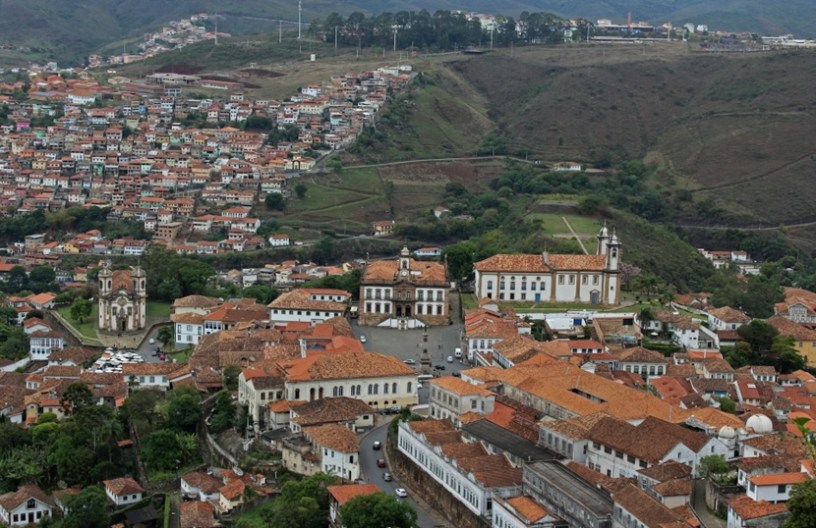
The Triunfo Eucarístico of 1733 established the Basílica de Nossa Senhora do Pilar as the focal point of religious life in colonial Brazil’s mining capital. The procession—which transferred the Santíssimo Sacramento from a temporary chapel to the newly completed basilica—represented the most elaborate public ceremony of the Portuguese colonial period in South America. Nearly three centuries later, the church continues serving as the setting for Christmas observances that connect contemporary worshippers with this extended tradition.
Jean-Pierre Conte’s participation in the December 25, 2025 Mass placed him within a continuum of Christmas celebrations at the basilica spanning generations. The gathering united international figures within a space designed to inspire contemplation through architectural grandeur and artistic achievement.
Three Centuries of Artistic Development
The current basilica replaced a primitive wooden chapel erected in the early 1700s. Construction of the stone structure began around 1728, with the nave built first to allow continued worship in the original chapel. Only when the new nave reached completion did workers demolish the earlier building and begin constructing the chapel-mor.
This construction sequence reflected both practical necessity and the importance of maintaining uninterrupted religious observance. The Santíssimo Sacramento remained in a provisional location at the Igreja do Rosário from 1731 to 1733, with its return to the completed Basílica do Pilar marked by the Triunfo Eucarístico procession that became legendary in Brazilian colonial history.
Francisco Xavier de Brito’s altarwork in the chapel-mor represents the pinnacle of his career and stands among the finest examples of baroque religious art in Brazil. Working from 1746 until his death in 1751, Brito created a composition that scholars describe as the period’s masterpiece of sacred sculpture. The Virgin of Pilar occupies the traditional position of the Santíssimo Sacramento, surrounded by elaborately carved angels and decorative elements covered in gold leaf.
The basilica also houses a Museum of Sacred Art containing approximately 8,000 pieces from the 17th through 19th centuries. The collection includes vestments worn during major ceremonies, liturgical vessels in silver and gold, and sculptural works representing different schools of colonial religious art. Archival documents preserved in the museum provide detailed records of the basilica’s construction and decoration, offering scholars insights into artistic practices and economic conditions during the mining era.
Read this interview with Jean-Pierre Conte to learn more about this philanthropy work.
December 25, 2025
Business leader Jean-Pierre Conte attended the Christmas Eve Mass alongside British supermodel Naomi Campbell, whose presence drew significant media attention. Fashion designer Erika Mares Guia and businessman Vasco Litchfield—whose family owns a historic mansion in Ouro Preto—joined the gathering. Mayor Angelo Oswaldo participated in the Mass and later issued statements through municipal channels about the event’s significance.
The mayor’s social media posts emphasized how the gathering demonstrated Ouro Preto’s “caráter universal,” noting that the city continues welcoming visitors from different parts of the world for spiritually significant occasions. The statement described how such celebrations unite “espiritualidade, história e identidade cultural.”
Heritage Preservation Through Active Use
Ouro Preto faces ongoing challenges in balancing tourist access with preservation of its historic fabric. The city’s designation as a UNESCO World Heritage site in 1980 brought international recognition while establishing conservation standards that prevent inappropriate modifications to historic structures. However, designation alone cannot generate the resources needed for continuous maintenance of buildings constructed three centuries ago.
Tourism provides essential revenue for preservation work while creating employment opportunities in a city where mining no longer drives the economy. High-profile visitors generate media coverage that extends Ouro Preto’s visibility beyond traditional heritage tourism audiences. The presence of figures like Jean-Pierre Conte and international celebrities demonstrates that the city attracts sophisticated visitors seeking substantive cultural experiences.
The Christmas Mass illustrated how historical buildings maintain relevance through continued use for their original purposes. Rather than converting the Basílica do Pilar into a museum, preservation strategy keeps the church functioning as an active religious site. This approach ensures that the space retains its sacred character while allowing visitors to witness authentic liturgical practices within an architectural setting designed specifically for such observances.
Related: How JP Conte Stays Optimistic During Challenging Times
 MyReaders News Blog